
WHY WATER TEMPERATURE IS THE MOST OVERRATED THING IN FISHING
Things like water temperature can derail your fishing and lead you astray if you try to base your theories on long-held misconceptions

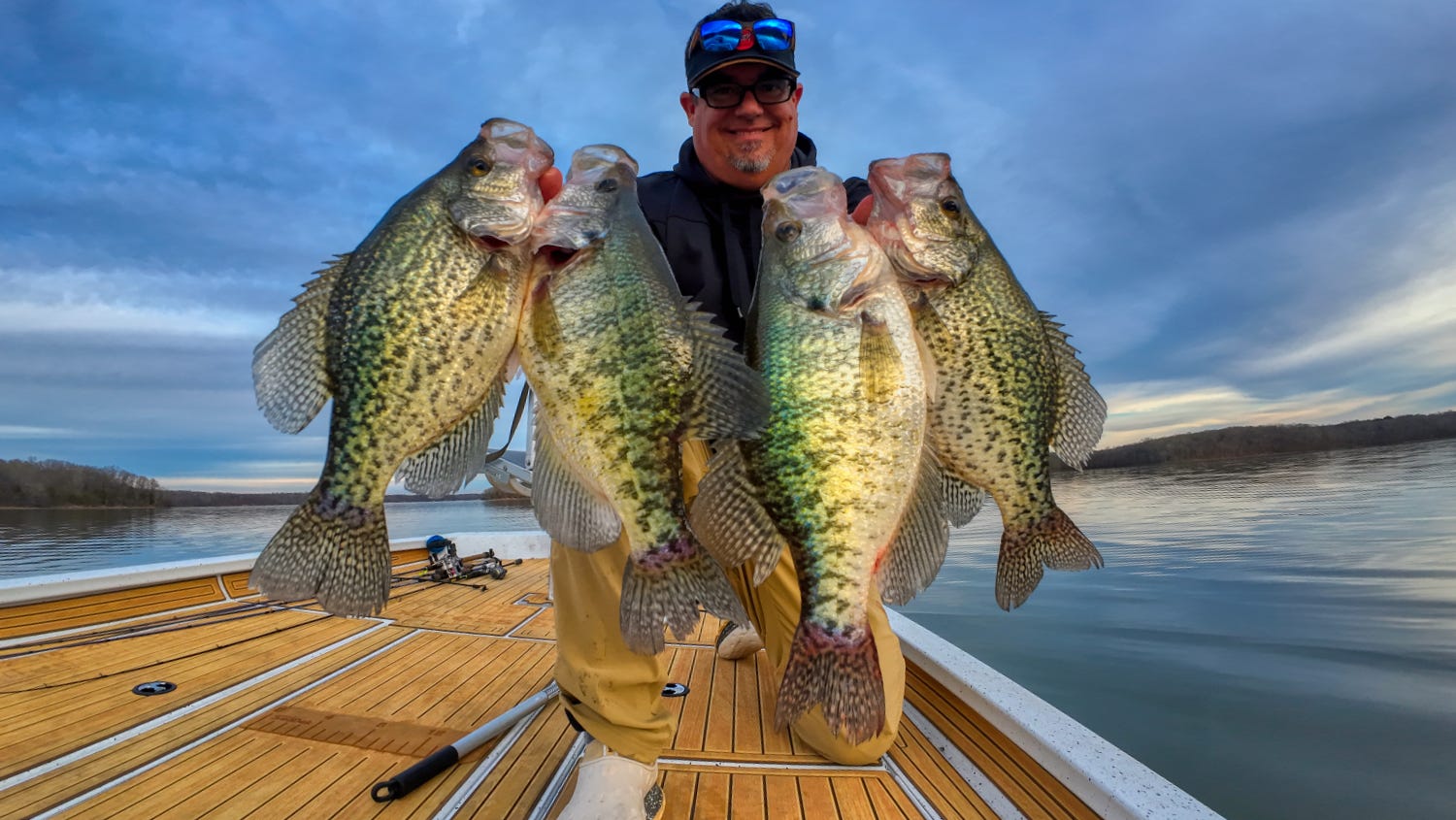
There are many things taken as fact in fishing. And most of these were taken as fact even though they were founded on theories. Things like how fish act in certain water temperatures is one of the obvious things that comes to mind. I’m here to tell you, water temperature is the most overrated thing in fishing. And I have proven it to myself on multiple occasions.
For years, we had no way of seeing what the fish actually did under the water’s surface. We would have some success with a pattern in a certain season, repeat it once or twice, and then set a bunch of footers in concrete and start creating a foundation for our theory.
But I have seen too many of those common misconceptions held as fact get debunked in my own fishing with the ability to watch fish realtime from season to season and fishery to fishery.
I feel like I grew up in the perfect era of fishing. I imagine every angler does. It’s human nature to believe everything in our sphere is the best, and sometimes only, way. But I grew up fishing in an aluminum jon boat with my father with a little kicker motor and no electronics. I remember getting our first graph, a 3-inch screen that barely could draw a line for the bottom. And I loved everything about learning fishing at that young age with what I had.
But I can also tell you now that my learning was at a snail’s pace for the first 10 or 15 years compared to what I’ve learned in the last 5. Because every experience was an extrapolation from what was tangibly seen above the surface to what was actually happening below the surface. You would catch some good fish in deep brush pile in the winter, for example, and then you extrapolated that all the better fish are deep because it’s so cold. Which of course we now know is mostly false.
In reality, some fish were there because there was probably food there. And it was a place to rest when activity levels were there lowest. And probably some other time in that day, those same fish were a lot shallower and more active. Or another group of better fish was active in shallow water somewhere else. Fishermen have a natural tendency towards making their accomplishments their result of their “more informed” assessment of the situation. We are all creatures of habit. I would argue, however, a little success has derailed more fishermen from actually understanding what is going on with the fishing on any given day.
THEORIES BECOME MORE OPEN FISHING PHILOSOPHIES
I am sure age has something to do with my refined approaches to fishing now. I know when I was young, I thought I had everything figured out no matter what it was. As I have gotten older, I realized it was never about “figuring everything out” but about staying on a path of constant learning. And the only way to do that is to realize you don’t have it all figured out and can learn new things everyday if you are open to the possibility of that.
I use the example of water temperature being largely misunderstood because I think for me, that was the eye-opening realization that triggered this improvement in my way of thinking, and as a result, my fishing. Now bear with me as I explain.
Don’t get hung up on the the Livescope information here. It just simply helps me illustrate my own evolution and will hopefully help some others expand their own fishing. Love it or hate it, it’s just a learning tool for me. Just like Side Imaging was in 2008 for me. Just like my first 2D sonar was in 1984. Just like my first paper map was in 1980. It’s the current tool that furthers my understanding, so I use it for what it is.
But my first water temperature change in philosophy happened on a bitterly cold winter day several years ago. At that time, I loved winter fishing and crawling big swimbaits and A-rigs around on the bottom on deep winter flats and channel swing banks. I had a few dozen places that I could run and would end up with a big stringer of fish on a good day and a nice limit on other days. Somedays it might just be a few fish but they would all be giants.
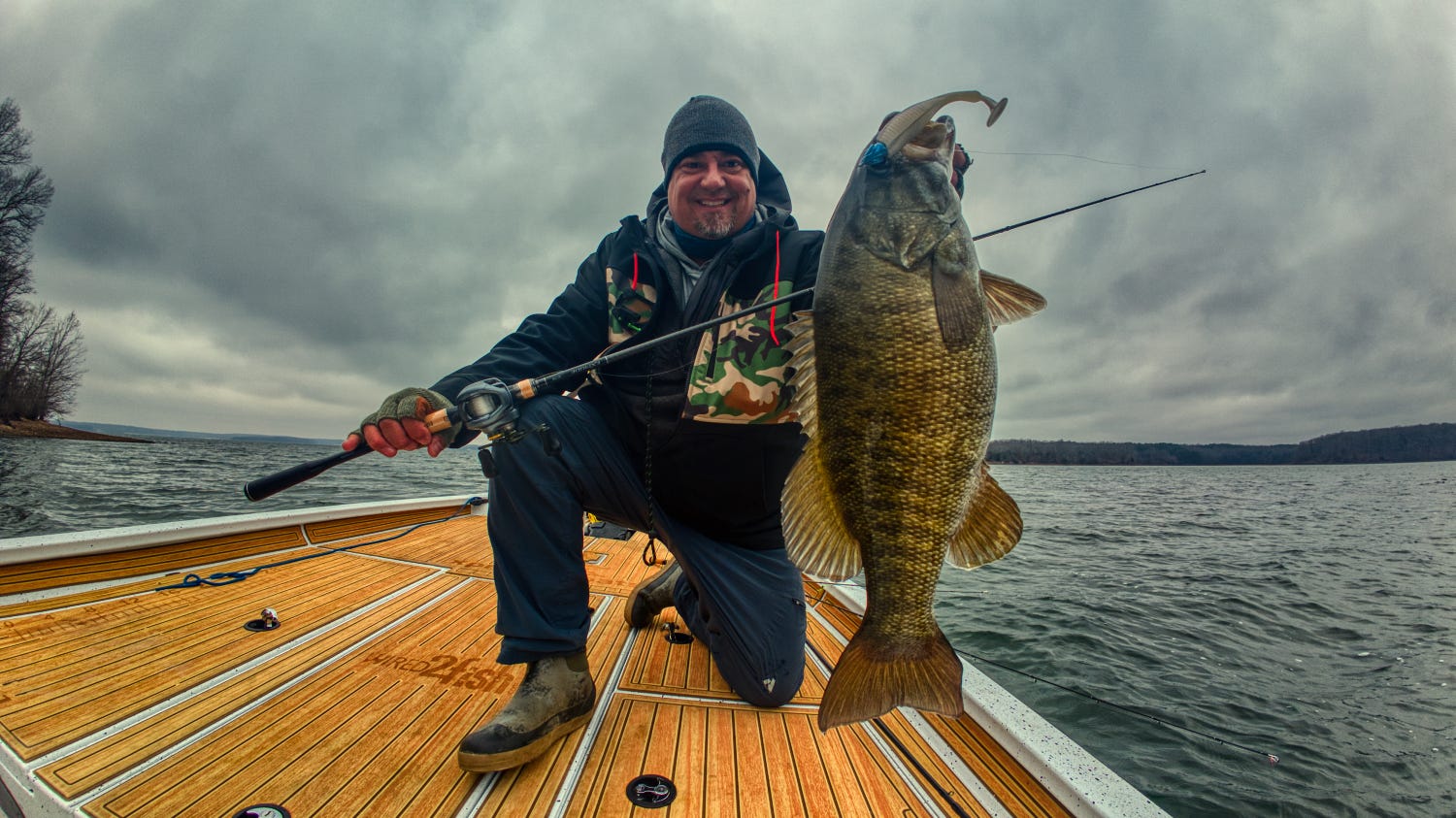
On this particular day, I had about finished a long cast and was reeling up to fire another long cast out. As I started burning my swimbait in I see something rocketing up behind it on the screen. The screen that said the water temp was 39 degrees. Like a freight train the fish clobbered my swimbait. I set the hook and knew it was a good one. I’m thinking, “big smallmouth” the way he aggressively attacked. It was a 7-pound largemouth. My biggest in weeks.
Now I was thinking what a fluke that was. So, on to a new spot in a new area. Same thing happens again. I see something meandering along the bottom. I get my swimbait down on bottom and start creeping. Right by the fish and nothing. So I start winding it pretty fast, here comes another fish. BAM! Another big one. This time a smallmouth. So now I’m considering the fact maybe these fish move a lot more than we give them credit for in cold water. I went on to catch 4 fish weighing more than 6 pounds a piece that day with that same speed reeling from the bottom approach.
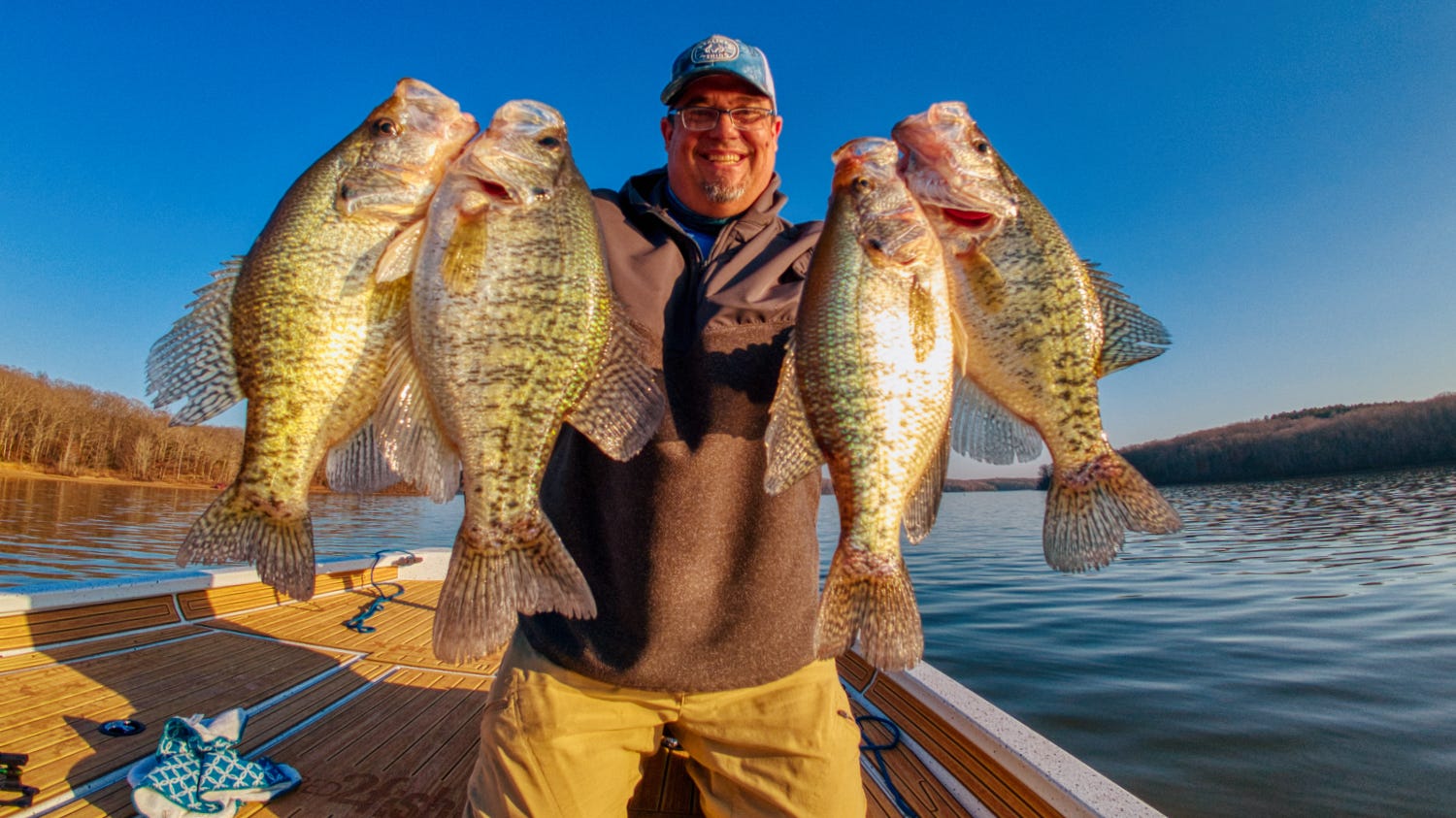
Fast forward a couple years to a crappie fishing trip. I had been on them pretty good in January in the first third of the big creek arms (out towards the main lake). On this day in early February, I was struggling to find any good fish. It was going into February, so I didn’t think they went back out to the main lake. So I decided to go to the middle third. I found a little better quality, but not like I had been getting. I decided to just go back towards the spawning areas. When I got back there, the water was just a couple degrees warmer. And it was loaded with nice crappie. At one point, I was hammering big white crappie in 2 feet of water. You tell me why a crappie was in 2 feet of water in February.
I’ll tell you why. Because there was food there. The baitfish must have swam back to be in that slightly warmer water from some warmer rains or something. And the crappie just migrated with them. As crazy as them being in 2 feet of water was on a cold day in February, the way they smacked those jigs was even crazier to me. Like you were catching spawn guarders. After having several days that really debunked my coldwater fishing ideology, I realized I had placed too many foundations on shaky footers.
PRECONCEIVED NOTIONS DERAIL YOUR FISHING
Thinking “the fish only do [THIS] when it’s like [THIS]” can really cause you to miss some fantastic fishing opportunities. And it’s not just them being more active in cold water. My best topwater day ever was an August day years ago. It was 101 with a Heat Index of 110. Borderline dangerous conditions because of how much you sweat in the humidity here. It was slick calm, and the fishing for most folks had been pretty awful that month.
I was throwing a Whopper Plopper (we had it to ourselves for a few years back then) and I had eventually meander up on some really shallow flats I like to fish in the fall. I was in 2 feet of water throwing as far as I could throw on a place that sticks out of the water at low pool. An enormous blow-up way out on the end of my cast awoke me from my sweat-induced coma. The fish jumped like crazy all the way back to the boat (mostly because it was 2-feet deep and he had nowhere else to go). I put my hands on it—a 6-12 beast of a largemouth with the head of an 8-pounder. I was jacked up to say the least.
So I said heck with it, lets run all the shallowest stuff. I had 8 blowups that day. The smallest was a 5-9 largemouth. I had 5 that went 29 1/2 pounds all on the Whopper Plopper and all from 2-4 feet of water. With water temps around 90 degrees, air temps over 100 and no wind. Nothing about that day said you should be fishing shallow. But there were big fish up there hunting big baitfish or gills or something.
Having these experiences basically caused me to throw water temperature out the window as a limiting factor. I still use it as a baseline in some instances, but nothing about water temp is concrete for me anymore.
SOMETHING NEW SHOULD NOT ERASE EVERYTHING LEARNED
It bears mentioning that I am not advocating forgetting everything you learned in fishing because you learned or realized something new. I am angler who believes everything in fishing is part of a progression. They are wild animals, on their way to somewhere from somewhere else. Feeding up for egg development and spawning rituals. Spawning. Recovering from the spawn. Rearing their offspring. Feeding back up for the impending winter. And probably many more things we don’t track.
Obviously water temperature can have an effect on these progressions. But I am using them more now as a guide or even just a place to start. From there, I move forward and back in areas hoping to intersect where the fish are in the current progression. I try not to make a decision on what the fish “should be doing” because it’s January or August these days. I start in a place I think they “likely” could be. And then I work up or back from there. Up can be up towards the main lake. Back could be way back in a creek. Up could be in shallow water. Back could be out much deeper.
People that have read my stuff know I am a ledge guy, a channel swing guy and a current guy. That’s because I believe these things give you the most predictable paths to intersect fish. Current can put fish, regardless of species, in very predictable places. Ledges and swings can give you the quickest ways to change your depth to figure out where the fish want to be in that area or on that day. Some folks call these high percentage areas. Which they are. But I think one long 400 yard ledge can seem like a lot of water to some. But the fact you can move back and forth on it and go from 5 feet of water to 20 feet of water can help you figure out a lot.
APPLYING IT OUTSIDE THE BOAT
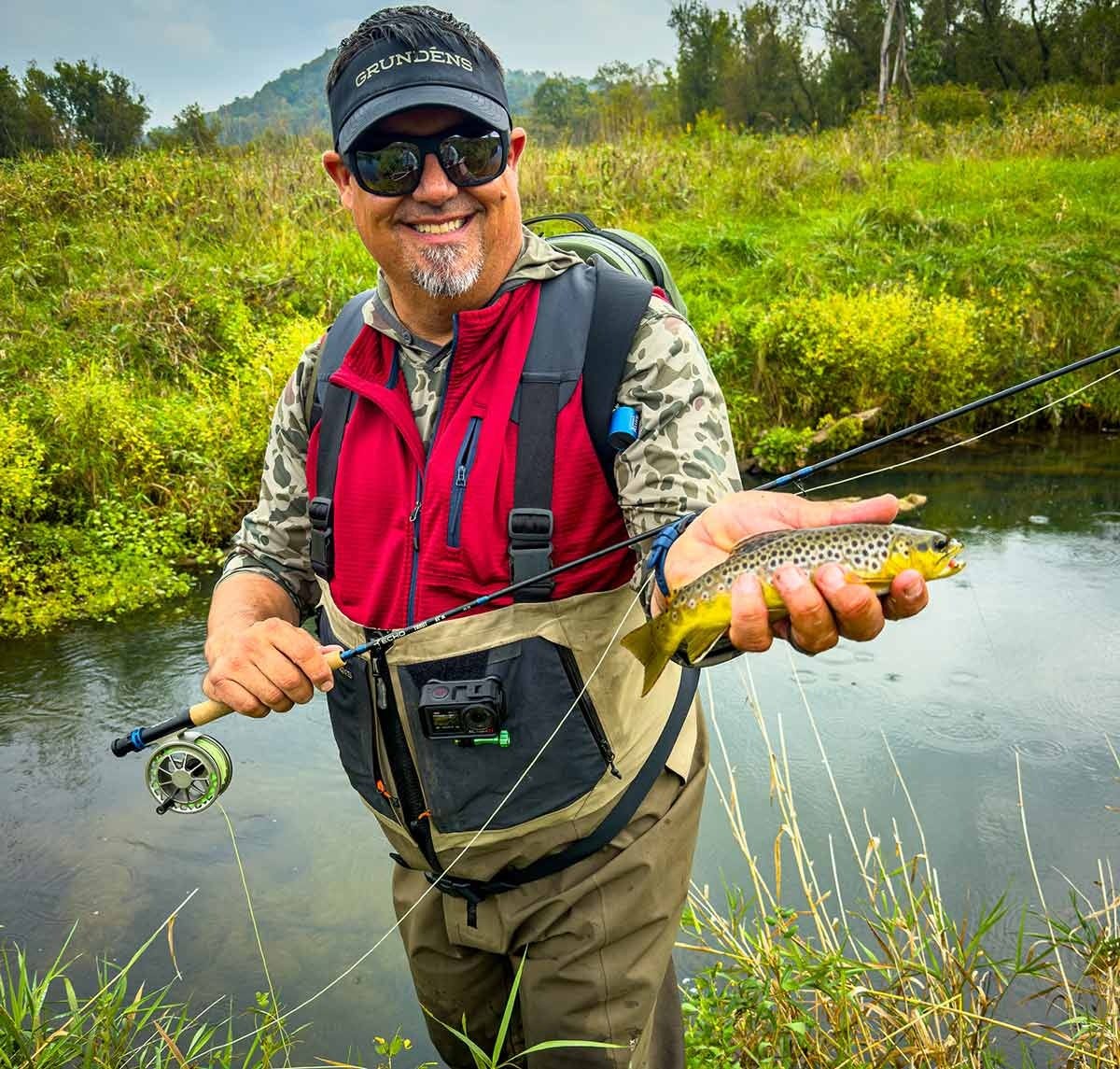
I also have found these open minded philosophies have improved my fishing on foot too. I still wade a lot of creeks and rivers. I still like to fish small waters from the bank or kayak. Almost all of these times I am without any electronics. But those learnings on the bigger waters have made me more efficient with my approaches on small waters.
In fact, this new learning approach on small waters is where I have found so much new passion for panfish, trout and other species on smaller rivers, creeks, city lakes and ponds. I find it very rewarding to go to new pieces of water, and figure the fish out quicker and better with these more open-minded approaches.
Now I spend a lot of my downtime looking for small lakes, creeks and rivers to go explore and finding the high percentage areas that can teach me the most about what the fish might do there in the smallest most efficient areas.
AUTHORS NOTE
Livescope gets a bad rap these days. I think it’s much easier to break down small waters. And I enjoy doing that without any electronics a lot. It’s a lot easier to have success on a small river than a giant body of water like Kentucky Lake. One creek arm on this lake is bigger than most lakes or rivers in other states. And the fish seem to hardly ever relate to the bank. Which means you are often out in the middle of a giant body of water, looking for nuances to build repeatable patterns. Searching for a needle in stack of needles some days.
Sure we did it without forward facing. Sure we did it without side imaging. But those tools have accelerated and solidified the learnings from theory to physical observation. Modern electronics are very beneficial to breaking down massive amounts of water with nothing visible to relate to in much shorter windows. For that reason, I won’t ever hate on them.
But that doesn’t mean I don’t enjoy breaking down a fishing pattern on a smaller piece of water without them just as much, if not more at times. And the learnings I have gained with electronics, have made me a far superior fisherman when I don’t use them.
Excellent! Thanks!