
How to Catch More Shellcrackers in the Spring
Follow their prespawn, spawn and post-spawn migrations for better fishing

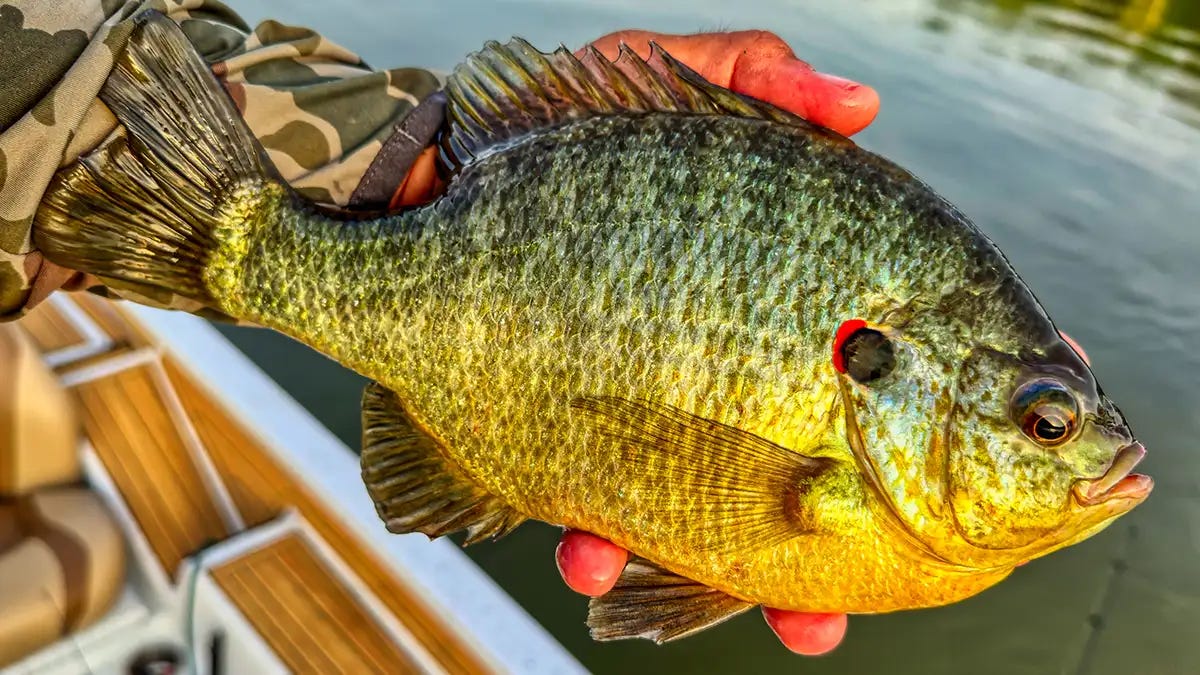
So many know, that the red ear sunfish, aka the shellcracker, is among my favorite of all the freshwater fish to pursue. Brown trout rank highly as well, but there is something special about shellcrackers when they group up in the spring. They live much of the year roaming, and being somewhat reclusive. A few times of year, however, they will gang up with their buddies and make for some special treats for panfish anglers.
Everyone immediate thinks bed fishing when they think of spring red ear fishing, but I want to share some of what I’ve learned the last few years of really “studying them.” By studying, I mean documenting my locations, catches, patterns and more. On top of that, I have also spent a good bit of time reading most of the studies I can find that have been done about red ear sunfish. And finally working directly with biologists on current projects related to red ear, gills, crappie and more.
I lean on other knowledgable panfish anglers to help me fill gaps in my own observations as well as corroborate or refute some of my findings as well. I am not made like most anglers where the catch is the only thing that matters.
I actually am in it these days more for expanding the knowledge around fishing. I figure when I’m gone, no one will even remember or know who I was. But maybe what we learn about fishing, we can pass on to others so they can not only have more memorable experiences but also they can pass those learnings down to the next group of anglers.
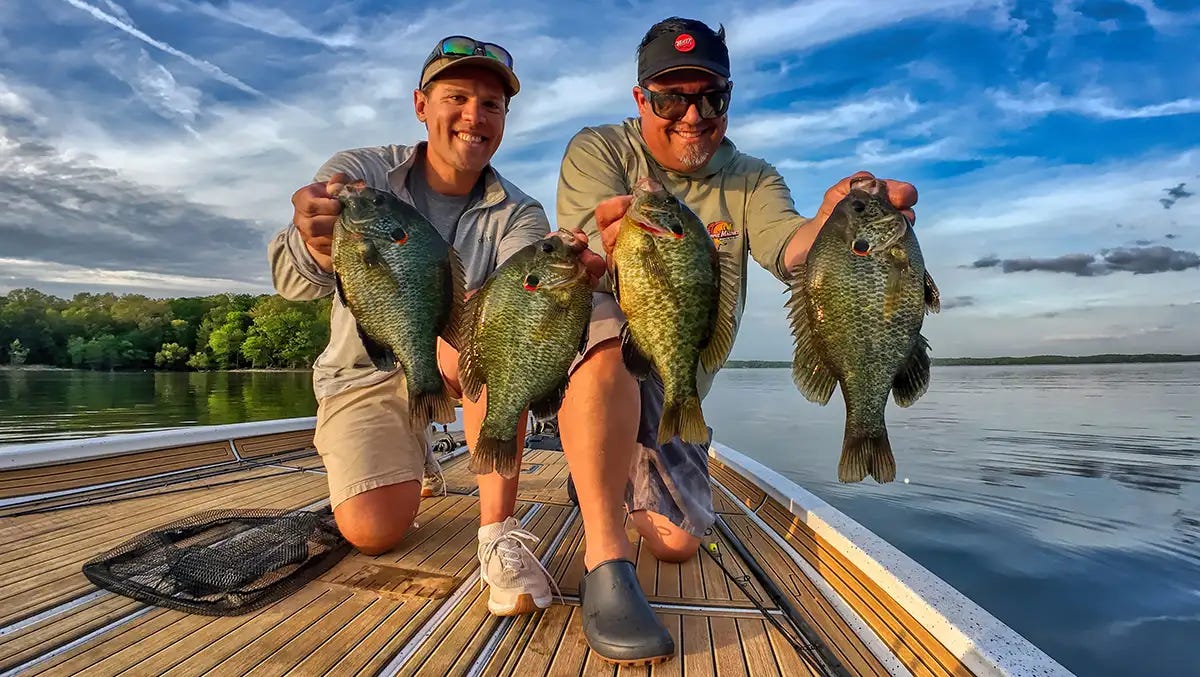
THE SPRING PROGRESSIONS FOR RED EAR
I have written several articles about red ear sunfish fishing, and I have also made a few videos. I suggest you read the following articles to get acclimated to shellcracker fishing:
That should give you a good knowledge base and added confidence to chase red ears in the spring. This article will focus more on their migrations in the spring and some simple learnings that should help you target them all spring, and not just when they are on the beds.
The first thing you should accept is that not all red ear spawn at once. So right now on Kentucky and Barkley Lakes, shellcrackers are spawning. However, there are also a bunch of shellcrackers in prespawn staging areas like deeper cover, bars in the mouths of bays and 45 degree chunk rock banks. While there are also fish up in a foot of water spawning. And there are fish that have spawned and left already. Heading out to a post spawn staging area.
Accepting this fact will also help you create multiple patterns to chase red ears in the spring. Some are feeding patterns. Some are spawning patterns and some are staging between the two.
In the early spring, red ear are moving from deeper, colder winter waters and getting in that mid-depth (5-12 foot) range to feed. They will also start making forays into shallower waters to feed. While they might not stay up there in a few feet of water, they will periodically move up there to feed and back off. That is why I usually spend my time in three different types of areas in the spring.
The first areas are the shallower high spots coming off the main lake. These high spots might be humps, bars or secondary points coming off the main lake and leading into the major bays, pockets and creek arms. They will get in these staging areas and forage, often grouping up to feed heavily. This can be some of the best action of the year if you can find them grouped up on these places.
From there, they will start making their move towards spawning grounds still feeding but moving to shallower feeding areas where they can easily move in and move out. This is a time where I catch a lot of red ears around stumps and bigger rocks on 45 degree chunk rock type banks. They are moving around in these areas gorging on snails and mussels and other small micro organisms to fatten up for the rigors of spawning.
As they move to their bedding areas, they often stop on the last deep spot just before their bedding areas. These last staging places can vary but often include things like big laydown trees, grass lines, and the last ditch on the way to the last shallow spawning flat in a pocket or cove.
We’ll talk more about spawning places in a moment. But after the spawn, they will move back out to those stumps, bars and humps to stage again and feed up again after the spawn before breaking up into wolf packs and becoming much more nomadic in the summer months. They are often most difficult to directly pattern in the summer and winter months where they are offshore, often suspending and relating to other fish like bluegills and feeding on a variety of things and at very varying intervals throughout the day … and night. But we’ll save that for another discussion.
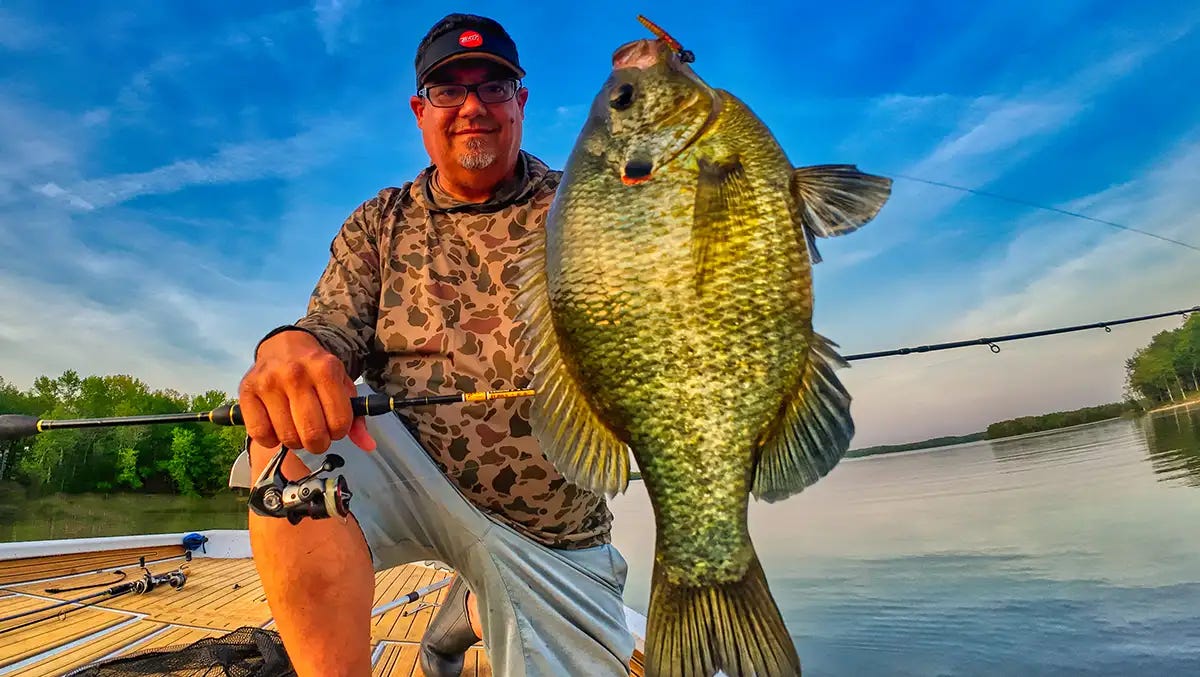
WHAT DRIVES RED EARS SHALLOW
For the most part, comfortable temperatures, the explosion of food and of course their biological impulses to spawn and mate all drive shellcrackers to the shallows. When the water temps get to a certain range, there is an explosion of bug activity as well as snail and mussel growth. Frankly, their food becomes a lot more plentiful and the shallow waters are a lot more comfortable for them.
People seem to believe this myth that red ears prefer deeper waters. When in actuality I find they often don’t care how shallow the water gets, as long as the bottom substrate is right to support their spawning needs and food sources.
But the longer the water temperatures stay around that 70 degree mark, they longer you will find them relatively shallow somewhere. Even in the summer they don’t always go out super deep. They will often suspend near or over deep water but they are physically not terribly deep themselves. And they will get very shallow. I will share more about their movements when the results are released on a telemetry tracking study that was recently done on them. I’ve seen a small sliver of the data already and it is going to open a lot of anglers eyes to their actual migrations.
DEPTH DOES NOT MATTER TO RED EAR
One thing to note, and one of the bigger myths I see guys mention in social media groups is how red ear beds are always deeper. When in truth, I find they are some of the shallowest spawning fish of all gamefish. Frankly I think they don’t care how shallow the water is, as long as the bottom is the right hardness. They don’t like to be around mud unless that mud has something on or around it that can support food they like. But for the most part, when they spawn, they are looking for the hardest bottoms they can find. If the hardest bottoms are in 1 foot of water, that’s where they are spawning.
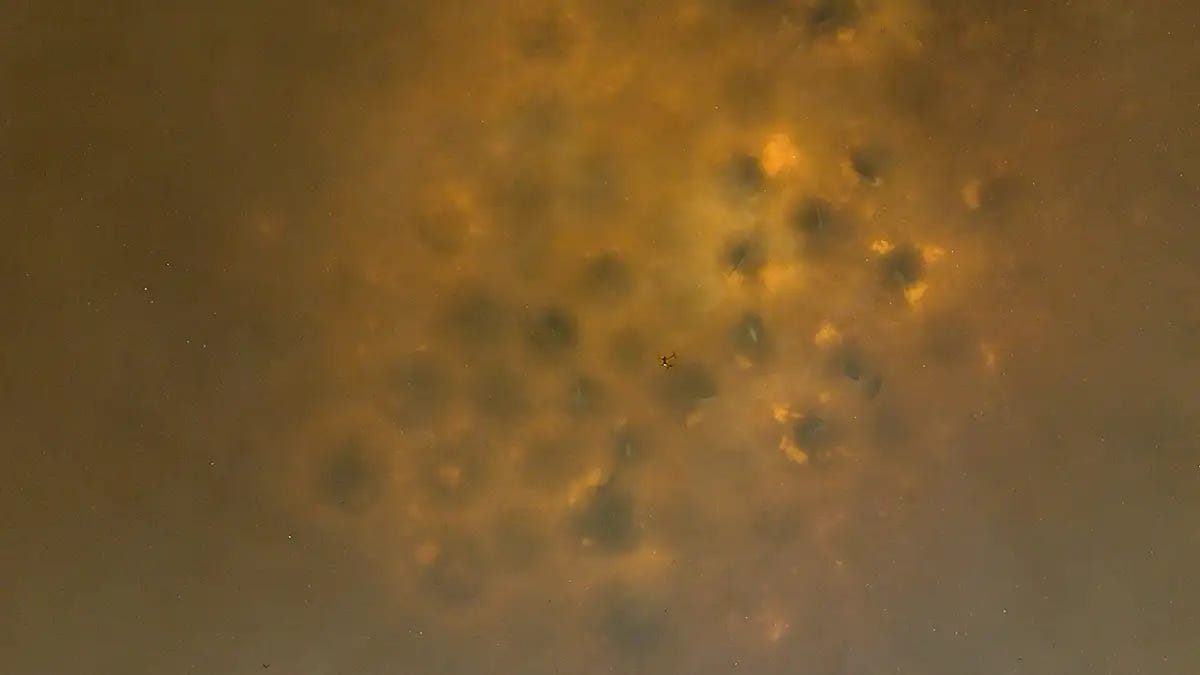
I didn’t corroborate this theory until two separate events this year solidified the idea for me. While traveling, I found a pretty sizable red ear bed on a small lake. And since it was a calm day, I decided to fly a drone over it for about 5 minutes. I had tried to fish it the day before and had very little luck. To my surprise the fish were extremely difficult to catch because they were so spooky. Turns out the water was only 6 inches deep and every time your jig or bait landed near the bed, they all spooked and scattered. They didn’t care that the water was “too shallow”—just that it had the hardest bottom around.
The second instance was when I found a shallow red ear bed a few weeks ago. When I was in 4 to 5 feet of water, I could push my Power Pole Spike into the bottom to tie my boat off to because the bottom was softer clay and mud. But when I got up in 1 to 2 feet of water where they were bedding, I could not physically push my stake into the bottom. The substrate was so densley packed and hard I could not get the spike to go more than an inch or two into the bottom. That’s when it finally clicked with me.
It’s not the depth. It’s the hardness.
FOOD CHOICES AND FEEDING ACTIVITY
Of note, I’ve been trying a different tactic the last two years when red ears are “spawning.” Keep in mind, that I already said not all red ear are spawning at the same time. So some are prespawn out deeper. Some are almost ready to spawn on the last ditch before the bed and some are spawning on the shallow flats. What is interesting as they get to the spawn, they pretty much stop feeding. When we sampled gills and red ears last year, the ones caught off of beds had little to no food in their systems.
Now this could be because guarding nests doesn’t leave them time to forage. It could also be that they are opportunists. So they only get to feed if some sort of food is near the beds or comes by, say in the form of a bug hatch in the evening. So maybe when we sampled in the morning, they had fed on a bug hatch the evening before, and it was already out of their system before we sampled.
Also, knowing this and after catching thousands of red ears over the last 20 years, I can definitively tell you, red ear do not exclusively feed on the bottom. I have sight fished for them a bunch and personally witnessed how they reacted to various presentations. I catch WAY more red ears suspending a jig under a float and “hopping” it than I do just dragging it on bottom. There is something about a bug that makes an abrupt movement that “triggers” red ear.
I also have found that a presentation that just looks like food is sometimes not as effective as one that looks more threatening. While something like a Panfish Magnet might perfectly mimic a larvae or worm, sometimes a hand-tied bug with spider legs gets bit way more on a bed because that bug looks more like it’s going to come in and rob their nest. And the more you shake it and hop it in their face, the more they react. Again not looking for food on the bottom, but rather reacting to a threat.
RECOMMENDED GEAR
I have been fishing most of this spring season with two or three setups. All my rods are light or ultralight rods with 2-pound line. I will admit I have broke off a few big fish that hang me in cover. But with these light setups, I can stay farther off fish and cast light jigs to the shellcrackers. I believe that is what gets me a lot more bites. I don’t ever use live bait, so I am careful to be stealthy with my approach.
I have been using the B’n’M Sam’s Super Sensitive Rod a lot as well as my trusty B’n’M Leland’s TCB Rod with 2-pound SOS as well as 2-pound Varivas Ajing Master Blue Moon. I have been alternating between the Tungsten Eye Hole Jighead with a Trout/Panfish Magnet in Green/Red Flk, Natural or Earthworm colors as well as the 1/64-ounce Eye Hole jighead that I hand tie a spider pattern on using chennile, rubber legs and a bit of Antron yarn or floss for the tail. Both have worked well. I’ve alternated these setups sometimes with an E-Z Panfish Float and sometimes with out.
For other gear recommendations check out 7 Best Panfish Lures to Catch Big Ones.